
The British Beekeeping Charity Rules and Rules of Membership
British Bee Charity CIO Apiary Rules
Effective from 01/08/2024
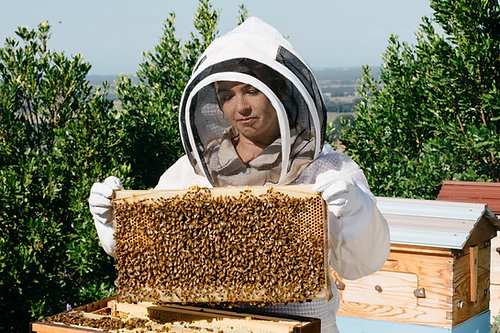
Hoebridge Apiary
These rules are to enable our members / beekeepers and their livestock to enjoy their hobby in a safe and healthy environment.
The CIO committee have nominated the Lynn Chitty to act as the apiary manager to help enable the smooth running of the apiary.
- Before entering the apiary site, members and visitors must have read and understood these rules and agreed to be bound by them.
- Anyone entering the apiary or using any of the facilities does so entirely at their own risk. The BBC CIO will not be liable for any injury to, or the death of, any persons or for the damage to, or destruction or loss of, any property, whether caused by the ordinary or gross negligence of the BBC CIO, it’s agents, contractors or any other person or resulting from vandalism or theft, by it’s agents, contractors or any other person resulting from any other cause whatsoever.
- Apiary security – we have two 4 digit combination padlocks; the first securing the road sliding gate and the second, the gate to the apiary. As an apiary user it is your joint responsibility to ensure that:
- Only members of BBC CIO have access to the apiary.
- Visitors by prior arrangement of the apiary manager may visit – the host member will take full responsibility for the safety of their guest/s
- That the padlock combinations are not shared openly – if asked by others, please direct them to the apiary manager.
- Only the apiary manager can share the combination to individuals and a log is kept.
- From time to time the apiary manager may change the combination and shall advice users accordingly.
- Protocol: when entering the site; After opening the gate wrap the chain around the metal post and reattach the padlock – and scramble the dials to secure the padlock. The same applies when leaving the apiary.
- When parking please do so considerately so as not to block or obstruct the access road.
- The same applies to the track leading up to the apiary entrance.
- We also have an understanding with The Links estate, in that we can use the hard standing car parking space – the vary last one set back on the left / not be confused with the bays by the gate which are designated to the residents.
- Please park in the designated hard standing car park unless you have heavy equipment to load/unload and then relocate to the car park.
- Of course, discretion to access will be made to accommodate mobility etc…
- By placing a hive/colony in the apiary the hive/colony owner agrees to pay the annual fees and charges and that if they consistently fail to comply with the apiary rules or instructions from the apiary manager or the BBC CIO or pay the fees they will be asked to remove their hives/colonies.
- We understand that a nuc may be created late in the season to help with swarm management, splitting a hive etc. These nucs may at the end of the season be used to bolster a weak colony or over wintered. For the purposes of charging, a nuc created after the 1st of March will have its fee differed till the following spring. If it has survived till the first spring inspection the following year, then the member will be liable to pay the differed fee. Members are obliged to feedback any changes / additions to the apiary manager. Note: A NUC is still considered as a hive and therefore the four / six hive rule applies. See 6 below.
- Only BBC CIO current full members may keep hives/colonies at the apiary. Associate members are not permitted to keep hives/colonies at the apiary. A full individual member can keep up to 4 hives/colonies at the apiary; a couple may keep up to 6 hives / colonies providing there is capacity at the apiary site. Before expanding or bringing extra colonies into the apiary the agreement of the apiary manager must be obtained and a date and position agreed. You may be requested to provide evidence of the good health of your bees, e.g. certificate from the bee inspector. A NUC of bees counts as one colony.
- BBC CIO members will have free access to their hive(s) during open apiary sessions. Open apiary sessions will be held on Wednesday evenings and Sunday mornings.
- BBC CIO members will be able to use the allocated car park, during the open apiary. Note there are limited spaces on the track adjacent to the Apiary. If members require vehicle access to the apiary for other reasons, please contact the apiary team. Members are asked to park responsibly with consideration to other users .Please be mindful as the CIO cannot be held responsible for damage to members or visitor’s property or vehicles.
- All BBC CIO members who keep bees at the apiary, are required to contribute to the management and general upkeep of the apiary, by participating in maintenance working parties on dates/times coordinated by the apiary manager.
- Correct protective clothing to include [wellington boots, a full bee suit or bee jacket (with suitable veils) and disposable gloves] must be worn correctly before entering the hive area. Leather gloves are not permitted.
- Any member or visitor to the apiary must on arrival, inform the apiary manager, if they are present, if they have any reason to believe they are susceptible to an allergic reaction to bee or wasp stings. They must also inform the apiary manager if they carry an EpiPen. BBC CIO cannot be held liable for allergic reactions.
- Members should not visit the apiary alone. This is a must to ensure safety and healthy practices.
- If a member is stung whilst at the apiary the apiary manager must be informed immediately if they are present. If a member feels unwell following a bee sting at the apiary the apiary manager will monitor the effect and alert the emergency services if required. In the case of a serious accident or anaphylactic shock, a member must telephone the emergency services, 999.
- Members and visitors under the age of 18 are not permitted into the apiary unless accompanied by their parent or guardian and a member of the BBC CIO.
- The location for the hive/colony will be determined by the apiary manager once any annual fees due have been paid. Members should not place or reposition hives/colonies without prior arrangement of the apiary manager. Each hive/colony owner shall ensure that all personal property they have on site bears a personalised mark or identifying label.
- The charge for keeping hives/colonies at the apiary is £21 per year (or part year) for the 1st hive or colony & £16 for each additional hive or colony. This rent includes the traditional jar of honey (honey money) – for ease of managing this, the current rent includes a £5.00 per hive charge to cover this. This is a fee that we pay to the landowners either in cash or jars of honey extracted from the BBC CIO hives.
- The payment charge for keeping hives/colonies at the apiary is to be made in advance of the season and by 1st April at the latest or on the date the hive/colony is moved onto the site if after the 1st April.
- The hive/colony owner retains full responsibility for the safety of others, for complying with the statutory regulations and for the proper upkeep and security of their hives/colonies. Items creating potential trip hazards, ill-tempered, dangerous, diseased bees or mismanaged colonies will not be tolerated and must be removed if requested by the apiary manager.
- A record must be kept for each hive/colony. This should be updated after each inspection and kept under the hive lid. In the event of an inability to inspect hives/colonies due to illness or another emergency the apiary manager must be advised.
- All hive records must show the name of the hive owner, a contact number. NBU registration number and an up to date medical treatment record card.
- During inspections if a member suspects disease in their colony they must inform the apiary manager immediately.
- Each BBC CIO member is responsible for providing their own equipment and to ensure that all their equipment is clean before use. Any equipment borrowed from the BBC CIO will be logged and must be signed for, this equipment needs to be returned within a reasonable length of time.
- When managing your hive / colony, please be mindful of your limitations when moving and lifting. Always seek assistance if in doubt.
- With the exception of an authorised Bee Inspector, on no account may anyone open any other hive/colony and remove/swap/replace/borrow any component, or brood or bees without the express permission of the hive/colony owner.
- In circumstances that the apiary manager suspects there might be an issue with a member’s hive/colony, which could be detrimental to other hives/colonies in the apiary, or it has not been inspected for at least 3 weeks, the apiary manager will notify the owner and support / act to mitigate the problem. This may mean opening the hive/colony to make an inspection and act accordingly.
- If the apiary manager or a BBC CIO member sees a swarm leaving or resting on a member’s hive, that swarm is deemed to belong to the owner of that hive/colony. Appropriate prompt action should be taken to notify the owner. The swarm should be collected if possible and kept safely until the hive/colony owner is able to retrieve it. If the hive/colony owner does not claim the swarm within 24 hours the swarm becomes the property of the person that collected it or may be donated to the BBC CIO charity. If the hive/colony owner claims the swarm they will compensate for the cost of any non- reusable equipment if used (e.g. cost of the NUC box and frames) alternatively, they can donate the swarm to the BBC CIO charity. Emergency contact numbers on hive notes are required to support this process.
- Treatment of the hives/colonies against communicable bee diseases and parasites will be carried out with the knowledge and supervision of the apiary manager, who may issue special instructions to deal with a health or safety threat to the hives/colonies or to beekeepers. The apiary manager will advise members when to treat hives/colonies and what form of treatment to use.
- The apiary manager will advise on the following:
- Appropriate disease treatments in line with integrated pest management planning.
- Honey harvest times.
- Last winter inspection
- Winter treatment
- Spring inspection
The British Bee Charity Trustees